I Learned to Code Just to See Who Unfollowed Me

I started the data analysis minor just to check a box. I felt it would make sense, and that I could get some of the STEM stuff I love, but I had no real passion for “Data Analysis.” It felt like a videogame: I had completed 20% of the classes, so I might as well complete it. But that’s all it was – a checked box, a completed game. 

However, as I’ve gone through the program, I found myself surprised by the linear relationship between time in class and the enjoyment I received through coding. This really began in Vectors, when I started enjoying solving harder problems. Recently, the Statistical Consulting class has provided complex and challenging problems that excite me to solve. I realize I love the feeling of being stuck, and frustrated, because it makes the moment when you solve the problem much more satisfying. Combined with the intro class, which focuses heavily on quantitative research, I’ve found myself loving coding and data. 

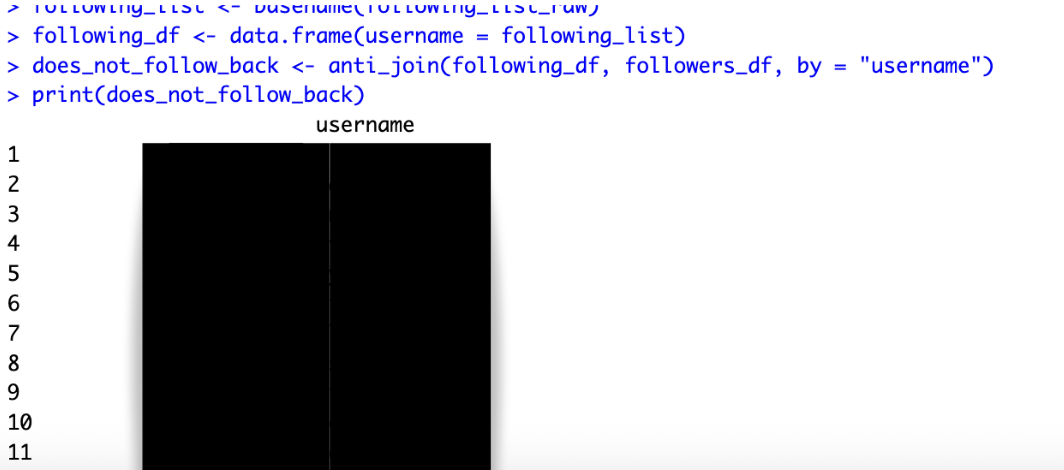
This culminated in the first mini-project I ever did outside of class – not for a resume, portfolio, or a grade. I used the tools from class for something totally unrelated. After downloading the HTML files of my Instagram followers and following, I built simple code to return who I follow that doesn’t follow me back. While this is, of course, a silly and egotistical use of my time, it is significant that I used the skills that I once pushed aside, and, even more importantly, that I enjoyed the process. 
Orchestrating Tension: Inside the “Heroes & Villains” Runway

Wesleyan’s Students of Color Fashion Show gave me the opportunity to tell a story of “good” and “bad”  through my sophomore line, aptly titled Heroes & Villains. This was meant to push the audience to think through the nuance of morality. I began creating it by mapping loose “tension maps” on the wall of my dorm. The show was meant to flow like a song — and, most importantly, to leave the audience thirsting for more. I made drawings of how each look was meant to be, and how it connected to the story. Later, this manifested in personalized training with each model. 

Music was one of the most important parts of the story. It created swells, and tension. As the audience sits in anticipation, a man walks with ease and vigor up front, and the music – my own mix, created with help from on-campus artists – begins to build. A robotic voice instructs the audience to applaud. They do. The first three models begin their walks in tracksuits from a NYC based brand, as I stand on the sidelines. “Spider-Gwen” comes out next, as the lights turn pink. 

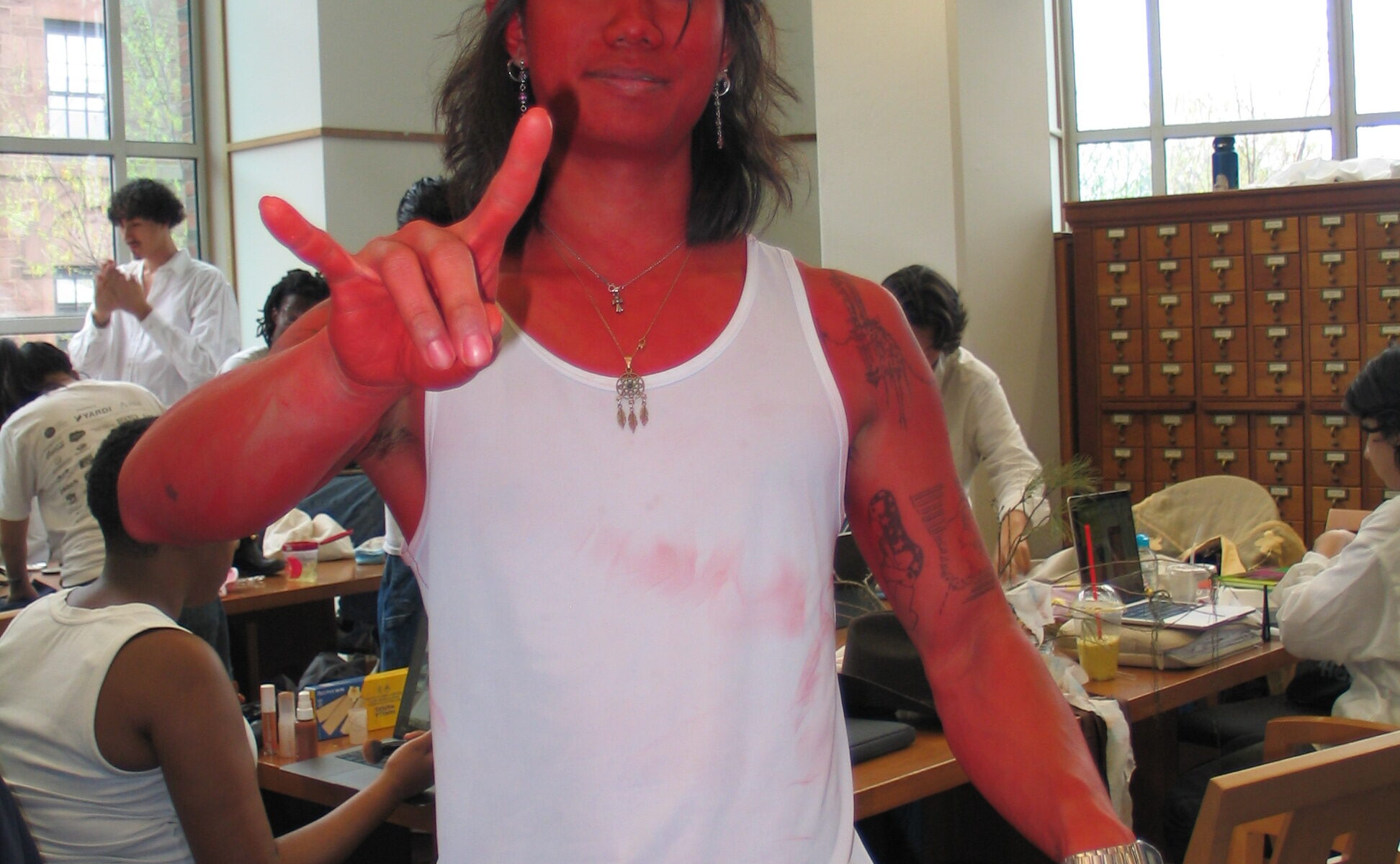
After her walk, the sands begin to shift as the music transitions to a gothic, house music beat. A man with long hair and a large black jacket makes his presence known, and, as the audience gazes upon him, he throws off his coat, revealing his red, demonic figure. His tattoos bleed through the red paint, as he leans back with an awe-striking pose. The royal guards of the desert appear, on either side of the T shaped stage, and bow to their Prince, who shrugs off the audience as mere subjects of his kingdom as his posse walks off the stage. I felt proud of my work and ecstatic seeing my vision realized.

As the models lined up to receive their applause, I stood at the back thinking of the promotional video I made on the SOC Fashion Show social media, and the messy papers in my dorm room, with incoherent lines that held stories. I smiled.

css.php